科技使我们的生活素质提高了不止一倍,这可以举很多例子比如:有了电灯,晚上不再漆黑;有了飞机,咫尺天涯不再是梦想。科技的益处是我们无法否认的,但科技如果应用不当,便会给社会造成危害,给人类带来灾难。
就如《隐身人》所说的那样:化学家格里芬经过一番苦心研究,他有一种可以使身体隐设的方法,并在自己身上试验成功。可是成为隐身人的他自我意识膨胀,想在一个地方称王称帝,之后用自己的.隐身技术统治人类,称霸全球。最后在一次追捕中被人活活打死。由此可见把一种科技运用好了,比发明它更加重要。就如DDT,那时人们滥用这种农药,使现在很多生态系统收到破坏,而且这DDT也会通过食物链最终进入人们的口中,最后危害人类自身。就像蛇的毒液一样,如果应用得当,有时会成为救命的一帖良药。药也有三分毒。科技是好的,是有益处的,关键在于人们如何去应用它;应用得好,造福万家;应用得不好,危害自身。
运用好科技,自身也要有良好的心态,在发明科技时,想的是为老百姓造福,而不是怎样为自己谋利,这样才可以算是一个好的发明家。
让我们一起运用好科技吧。
As a young man, in the late 1920s or early 1930s, the narrator lived in the South. Because he is a gifted public speaker, he is invited to give a speech to a group of important white men in his town. The men reward him with a briefcase containing a scholarship to a prestigious black college, but only after humiliating him by forcing him to fight in a “battle royal” in which he is pitted against other young black men, all blindfolded, in a boxing ring. After the battle royal, the white men force the youths to scramble over an electrified rug in order to snatch at fake gold coins. Three years later, the narrator is a student at the college. He is asked to drive a wealthy white trustee of the college, Mr. Norton, around the campus. Norton talks incessantly about his daughter, then shows an undue interest in the narrative of Jim Trueblood, a poor, uneducated black man who impregnated his own daughter. After hearing this story, Norton needs a drink, and the narrator takes him to the Golden Day, a saloon and brothel that normally serves black men. A fight breaks out among a group of mentally imbalanced black veterans at the bar, and Norton passes out during the chaos. He is tended by one of the veterans, who claims to be a doctor and who taunts both Norton and the narrator for their blindness regarding race relations.
The narrator says that he has stayed underground ever since; the end of his story is also the beginning. He states that he finally has realized that he must honor his individual complexity and remain true to his own identity without sacrificing his responsibility to the community. He says that he finally feels ready to emerge from underground.
As the narrator of Invisible Man struggles to arrive at a conception of his own identity, he finds his efforts complicated by the fact that he is a black man living in a racist American society. Throughout the novel, the narrator finds himself passing through a series of communities, from the Liberty Paints plant to the Brotherhood, with each microcosm endorsing a different idea of how blacks should beha一ve in society. As the narrator attempts to define himself through the values and expectations imposed on him, he finds that, in each case, the prescribed role limits his complexity as an individual and forces him to play an inauthentic part.
Upon arriving in New York, the narrator enters the world of the Liberty Paints plant, which achieves financial success by subverting blackness in the service of a brighter white. There, the narrator finds himself involved in a process in which white depends hea一vily on black—both in terms of the mixing of the paint tones and in terms of the racial makeup of the workforce. Yet the factory denies this dependence in the final presentation of its product, and the narrator, as a black man, ends up stifled. Later, when the narrator joins the Brotherhood, he believes that he can fight for racial equality by working within the ideology of the organization, but he then finds that the Brotherhood seeks to use him as a token black man in its abstract project.
Ultimately, the narrator realizes that the racial prejudice of others causes them to see him only as they want to see him, and their limitations of vision in turn place limitations on his ability to act. He concludes that he is invisible, in the sense that the world is filled with blind people who cannot or will not see his real nature. Correspondingly, he remains unable to act according to his own personality and becomes literally unable to be himself. Although the narrator initially embraces his invisibility in an attempt to throw off the limiting nature of stereotype, in the end he finds this tactic too passive. He determines to emerge from his underground “hibernation,” to make his own contributions to society as a complex individual. He will attempt to exert his power on the world outside of society’s system of prescribed roles. By making proactive contributions to society, he will force others to acknowledge him, to acknowledge the existence of beliefs and beha一viors outside of their prejudiced expectations.
Over the course of the novel, the narrator realizes that the complexity of his inner self is limited not only by people’s racism but also by their more general ideologies. He finds that the ideologies advanced by institutions prove too simplistic and one-dimensional to serve something as complex and multidimensional as human identity. The novel contains many examples of ideology, from the tamer, ingratiating ideology of Booker T. Washington subscribed to at the narrator’s college to the more violent, separatist ideology voiced by Ras the Exhorter. But the text makes its point most strongly in its discussion of the Brotherhood. Among the Brotherhood, Because he has decided that the world is full of blind men and sleepwalkers who cannot see him for what he is, the narrator describes himself as an “invisible man.” The motif of invisibility pervades the novel, often manifesting itself hand in hand with the motif of blindness—one person becomes invisible because another is blind. While the novel almost always portrays blindness in a negative light, it treats invisibility much more ambiguously. Invisibility can bring disempowerment, but it can also bring freedom and mobility. Indeed, it is the freedom the narrator derives from his anonymity that enables him to tell his story. Moreover, both the veteran at the Golden Day and the narrator’s grandfather seem to endorse invisibility as a position from which one may safely exert power over others, or at least undermine others’ power, without being caught. The narrator demonstrates this power in the Prologue, when he literally draws upon electrical power from his hiding place underground; the electric company is aware of its losses but cannot locate their source. At the end of the novel, however, the narrator has decided that while invisibility may bring safety, actions undertaken in secrecy cannot ultimately ha一ve any meaningful impact. One may undermine one’s enemies from a position of invisibility, but one cannot make significant changes to the world. Accordingly, in the Epilogue the narrator decides to emerge from his hibernation, resolved to face society and make a visible difference.
平日一个人下班走在路上,下意识总会不时“左顾右盼”,观察周围的人和事,每个人步履匆匆擦肩而过,而有那么一些人,节奏较之其他人慢了好几拍,甚而停了下来,孤自坐在某个台阶上,或发呆,或玩着手机。傍晚时分,屏幕闪出的光芒微弱而倔强,但依然透出丝丝凉意,亦或,寂寞。
大家都在急匆匆回家,渴望在家的港湾里卸下一天的疲惫与焦虑。陌生人,你为什么不回家呢?是不是你的家并不在这个城市呢?是不是今天不太顺利,却无法抒发呢?其实,我也是一个人,和你一样,在这个城市也并无太多存在的痕迹。
前段时间参加同学婚礼,陪她走在小城的路上,不时总会遇见熟人路过,互相打招呼、寒暄。这个胖胖的大叔是一个单位的同事,那个小弟弟是亲戚家的孩子,刚上初中……心底蓦然涌出一阵暖流,在魔都待多久都找不到归属感,原来,是因为少了这么多熟人的环绕。
不知是不是人本孤独的缘故,每次看到同样的神色,都会感同身受。我们可不可以抱团取暖呢?可是,又有谁会有勇气向前走一步呢?我们都不会。
记得之前参加沪上某个义工活动,一位朋友经常参加,对敬老院里的每一位老人都非常熟悉。当天,是他的生日,带了大蛋糕,上上下下跑来跑去,送给每一位老人。后来问起,晚上是不是还会和家人再吃一次蛋糕,他说,家人都不在上海,在这里和老人们在一块就算过生日了。说这句话的朋友,年岁已近40,单身未婚,除了工作,平常空闲时间都会来这里陪伴相识的老人。生活有那么多种无奈,不知道,这种一眼看得到尽头的孤独算不算最浓厚的那一种。
社会本身形成于人和人之间盘根错节的各种关系,而大城市里的很多异乡人,似乎正在逐渐远离这一切,更像是一个个孤岛,而非纵横相连的网络,那么近,那么远。“每个人的一生的都是一场孤独的修行”,看到过无数遍的.一句话,没想到,竟然是真的,真实到看得见,摸得着。其实,地铁口独自一人看着手机的陌生人,如果我们每天都可以打个招呼,聊聊天,是不是日子机会多份期待和牵挂呢?有点疯狂,可是,在家不是每天都是这样的吗?每天晚上,回家路上,一路和街口卖菜的阿姨叨叨最近的菜价,顺路去隔壁相识的夫妻店买点水果,冬天到了,烤红薯的大爷应该也快要开始摆摊了吧。
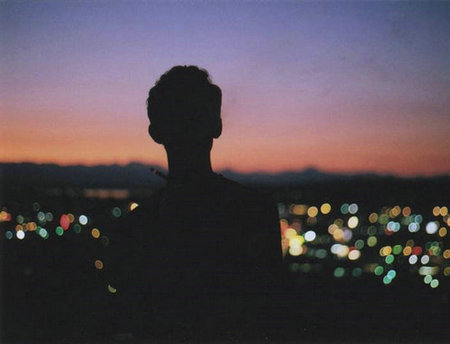
装满了陌生人的大都市,充斥着因为这份距离而带来的一切,有无上的自我和自由。可是,偶尔是不是也会陷入无我的泥淖呢?我是谁,要去哪里,有谁会在乎每一天自己的所得所失呢?穷尽一生的探索和追寻,真的会带来拨开云雾的愉悦和满足吗?更多时候,我们似乎只是透明的隐形人,兀自行走在既定的路线上,并无交集,也不成段落,仅仅是一条笔直平凡的线条,不发一声,向前延展,迎接不可知的未来。
花开花落,风去无痕。