《莎士比亚故事集》读后感。
(感想600字以上)
《仲夏夜之梦》读后感对于莎士比亚来说,他的悲剧似乎比喜剧更加有名,但是对于我来说还是喜欢从高兴开始。
莎士比亚可以算是有史以来世界上出色的戏剧家。
就当我翻开《仲夏夜之梦》时。
印象是打开了一部悲剧。
但好像的所有的高兴似乎是在悲剧之后才能诞生,余秋雨说过真正伟大的不是悲剧,也不是喜剧,而是那些悲喜剧,让人留着眼泪血含着笑读完。
就这点而言欧亨利似乎更像,但是他那是短篇小说,比起莎士比亚的戏剧要逊色许多,一开始就看到了一对夫女的争执赫蜜雅,赫蜜雅(下简称赫)一心要跟莱珊德共同捍卫自己的爱情,可他封建的父亲伊(简称)执意要让他嫁给小贵族第米特律。
对于赫对自己爱情的诠释。
父亲找到了希修斯大公,来辩解。
留给这对情侣的只有无情的雅典法律。
古有陆游的“书到用时方恨少、事非经过不知难”,李若蝉的“鸟欲高飞先振翅,人求上进先读书;今有普希金的“人的影响短暂而微弱,书的影响则广泛而深远”,还有列夫托尔斯泰的“理想的书籍是智慧的钥匙”。
我这次要为大家推荐的是:《仲夏夜之梦》。
《仲夏夜之梦》是威廉·莎士比亚青春时代最后一部也是最为成熟的喜剧作品,同时也是威廉·莎士比亚最著名的喜剧之一。
夜之梦,花之惑。
它讲述了一个唯美的童话故事:仲夏葱郁的森林里,柔美浪漫的月光下,仙子在花丛中轻舞。
赫米娅和拉山德、海丽娜与狄米特律斯,因为不如意的婚恋双双来到这儿。
他们几经波折,最后在仙王的帮助下,有情人终成眷属。
这个故事讲述了两对恋人的悲欢离合。
当然,比起郝米娅,海丽娜对恋人的爱慕则表现得更为大胆、直露、热烈:当海丽娜向狄米特律斯告知拉山德和郝米娅私奔的消息,并跟随他来到森林时,她却还是没有得到她想要的,反而要为自己的愚蠢付出代价。
狄米特律斯更加的讨厌她,让她“滚开”,海丽娜却说:“是你吸引我来的,你这硬心肠的磁石
可是你所吸引的却不是铁,因为我的心像钢一样坚贞。
要是你去掉你的吸引力,那么我也就没有力量再跟着你了。
”足以见得海丽娜的坚贞。
当狄米特律斯厌恶地说:“不要过分惹起我的厌恨吧;我一看见你就头痛。
”海丽娜只是说:“可是我不看见你就心痛。
”一字一句,无不显示着海丽娜的痴情。
当狄米特律斯对海丽娜的默默温情依然熟视无睹,甚至产生了要海丽娜任凭处置时,她仍然倔强地回答道:“最凶恶的野兽也不像你那样残酷。
”糊涂与理智在作者对海丽娜的描写中得以凸现,使她的形象更为鲜明、可爱。
可书中一个小插曲却让我深思:一滴草汁真的能扭曲人的情感么
或许,这终究只是个故事
莎士比亚四大悲剧读后感
《莎士比亚悲剧读后感》 莎士比亚确实是位伟大的作家,在他的作品中悲喜剧皆有,可以说他的戏剧包含着十分深刻的含义。
正如文艺复兴时期其他杰出的作家、艺术家一样,他的创作中充满了对人性的关怀,如诗人一样满怀激情的对白、如哲人一样深邃的思想,莎士比亚的四大悲剧正是其中的代表。
悲剧具有其独特的魅力,古希腊时代的剧作家,如索福克勒斯、埃斯库罗斯都是以悲剧扬名希腊。
一部不朽的《俄底甫斯王》被后人研究了几千年也不能穷尽其中的奥妙,心理学、宗教学、文学都从这部剧作中得到了启发。
莎士比亚的悲剧又是一个不可逾越的高峰,他完全可以和古希腊多产的作家相媲美。
这些作品就像甘泉一样不可干涸,总能让我们思考生命乃至宇宙的意义。
我认为悲剧应该具备以下四个元素,无论是哪出悲剧,或多或少都可以找到这四种基本的元素。
第一,理想和现实的冲突。
第二,人性的缺点所造成的不可避免的悲剧。
第三,对所谓命运的无可奈何。
第四,悲剧人物理想人格的彻底破灭,通常以悲剧人物的死亡而告终。
《奥塞罗》中明显的悲剧元素就是奥塞罗性格的缺陷,只要是人总会有些嫉妒心的。
可是这出戏中的悲剧并不是奥塞罗的性格作祟,也不能归罪于那个蛇蝎心肠的恶汗亚果(我甚至有点喜欢这个敢于剖析自己心理的阴谋家),在戏剧的刚开始我们就能感受到奥塞罗和玳丝德摩娜的爱情注定是个悲剧。
玳丝德摩娜并不了解奥塞罗,她喜欢奥塞罗的理由很简单,她喜欢他讲述那些颇具传奇性的经历,一句话她只喜欢一个浪漫的理想。
当亚果的妻子告诫玳丝德摩娜当心奥塞罗的妒忌的时候,她却说“我想他在出生地让阳光把这种气质(妒忌)都吸去了。
”而奥塞罗有点明白自己的妻子为什么喜欢自己,或者说他对自己妻子的爱本来就不放心,在这种情况下他对玳丝德摩娜又爱又恨又怕。
最终,亚果只是起了一个导火索的作用,将这种虚假的、毫无信任的、不牢固的爱情炸个粉碎,而真正具有爆炸力的火药却在奥塞罗和玳丝德摩娜的身上。
由此看来这出悲剧倒有些主人公咎由自取的味道,可能是这种惩罚太重了——以男女主人公的死而结束,所以才有了很强的悲剧色彩。
《里亚王》的悲剧似乎在我们的生活中绝少见到,毕竟我们认为亲情是最温暖的也是最牢固的。
可是我们要注意戏剧的背景一个充满谋求权力和财富的宫廷政治斗争,政治可以让一切变的肮脏,对触手可及的权力和财富的谋求可以让人变成魔鬼。
西方有这样一个故事是讨论人性的,有一个善良的牧羊人,他绝对是一个正直的人,可是有一天他得到了一枚戒指,戴上它之后可以隐身。
于是这个牧羊人可以做一些他以前不能做的事情,终于有一天他进入了王宫,勾引了王后并密谋杀死了国王,从此他和以前的自己判若两人,成了一个十足的暴君。
我们可以想象如果他没有得到那枚充满魔力的戒指,他一定还是一位善良的人。
叔本华说过,人每时每刻都是有作恶的想法的,这其实是有一定道理的,关键是人有时候没有作恶的能力而已。
里亚王的悲剧的根源也许就在这里。
日本导演黑泽明的力作《乱》就是根据《里亚王》改编的,故事的背景是日本的战国时代,这让我们感觉更加真实了,如果是太平盛世,毫无权力的寻常百姓中怎么可能发生这样的事呢
。
其实我们翻一翻历史就会发现这样为权力而父子、兄弟相残的事情简直太多了。
里亚王的悲剧就在于人性的沦落,莎士比亚在这部作品中也时刻反思着人性的本质。
《里亚王》的结局是悲惨的,但是注意,我们只要稍稍改变一下结局,那么悲剧就能够马上变成喜剧。
如果最后,里亚王的小女儿考黛丽亚活着,里亚王也没有死,那么这就是个皆大欢喜的结局,悲剧就能够成为喜剧。
法国剧作家莫里哀的喜剧《伪君子》同样也可以很简单的转变成悲剧。
结局可以这样设计,伪君子答尔丢夫很顺利的霸占了奥尔恭的财产,他的女儿玛丽亚娜也不得已嫁给答尔丢夫,玛丽亚娜的情人瓦赖尔刺杀答尔丢夫未遂而入狱,奥尔恭的妻子郁郁而逝,奥尔恭沦为乞丐。
鲁迅先生说过“悲剧就是把美好的东西打碎给人看。
”这是比较形象的说法但似乎也没有涉及到悲剧的根源。
《麦克白斯》颇似古希腊悲剧,其中很强调命运对人嘲弄。
麦克白斯原本功成名就,可是他却相信三女巫的预言,最终预言一一应验,但是麦克白斯也身败名裂。
这让我想起索福克勒斯的《俄底甫斯王》以及埃斯库罗斯的《阿伽门农王》,人的举动都受到神的干涉,当然其中也体现着主人公性格的缺陷。
可是《俄底甫斯王》中几乎没有表现出俄底甫斯王的人格或者是性格带来必然的毁灭,可以说俄底甫斯是一个生性善良的人,当必然的命运来袭却无力逃避。
也许悲剧的悲就体现在人的无辜和无助上,悲剧的美表现为主人公的抗争上,虽然看起来是徒劳的。
可以看到悲剧中必然会出现痛苦和死亡,人们喜欢悲剧正是由于每个人都是悲剧的主角,因为同悲剧一样,人的一生也要以死亡作为结局而谢幕。
但是悲剧并不是悲观,我们的结局是不可避免的,但是在短暂的悲剧中却表达了一种不妥协的永恒的精神。
因此,明知理想遥不可及我们还是执著追求,明知人无完人但还是要不断完善自我,明知命运无常可是一点也不畏惧,死亡是生命的终结,但不是生命存在的目标。
莎士比亚十四行诗第12首赏析
英诗浩瀚,篇幅长短不一,长至成集,短至仅句。
为使英语学习者了解英诗,特拟此文,从实用角度阐述英诗的欣赏:诗的格律、诗的押韵、诗的体式、诗的评判。
诗以高度凝结的语言表达着人们的喜怒哀乐,用其特有的节奏与方式影响着人们的精神世界。
诗讲究联想,运用象征、比喻、拟人等各种修辞手法,形成了独特的语言艺术。
(有关修辞手法可参考相关书籍)。
一、 诗的格律 “格律是指可以用脚打拍子的节奏”,是每个音步轻重音节排列的格式,也是朗读时轻重音的依据。
而音步是由重读音节和非重读音节构成的诗的分析单位。
重读音节为扬(重),在音节上用“-”或“ˊ”标示,非重读音节为抑(轻),在音节上用“)”标示,音步之间可用“/”隔开。
以下是五种常见格式: 1. 抑扬格(轻重格)Iambus:是最常见的一种格式,每个音步由一个非重读音节加一个重读音节构成。
As fair \\\/ art thou \\\/ my bon\\\/nie lass, So deep \\\/ in luve \\\/ am I : And I \\\/ will luve \\\/ thee still,\\\/ my dear, Till a` \\\/ the seas \\\/ gang dry: Robert Burns(1759-1796): My Luve Is like a Red, Red Rose 注;art=are luve=love bonnie=beautiful a`=all gang=go 上例中为四音步与三音步交叉,可标示为:)-/)-/)-/()-) 2.扬抑格(重轻格)Trochee:每个音步由一个重读音节加一个非重读音节构成。
下例中为四音步扬抑格(少一个轻音节),可标示为:-)/-)/-)/- Tyger!\\\/ Tyger!\\\/ burning \\\/ bright In the \\\/ forests \\\/ of the \\\/ night William Blake: The Tyger 3. 抑抑扬格(轻轻重格)Anapaestic foot: 每个音步由两个非重读音节加一个重读音节构成。
如:三音步抑抑扬格))-/))-/))- Like a child \\\/ from the womb, Like a ghost \\\/ from the tomb, I arise \\\/ and unbuild \\\/ it again. 4. 扬抑抑格(重轻轻格)Dactylic foot: 每个音步由一个重读音节加两个非重读音节构成。
如:两音步扬抑抑格-))/-)) ˊTouch her not \\\/ ˊscornfully, ˊThink of her \\\/ ˊmournfully. -- Thomas Hood 5. 抑扬抑格(轻重轻格)Amphibrach:每个音步由一个非重读音节加一个重读音节再加一个非重读音节构成。
如:三音步抑扬抑格)-)/)-)/)-) 下例中最后一个音步为抑扬格。
O ˊhush thee \\\/ my ˊbabie \\\/ thy ˊsire was \\\/ a knight. 在同一首诗中常会出现不同的格律,格律解析对朗读诗歌有一定参考价值。
现代诗中常不遵守规范的格律。
二、 诗的押韵 押韵是指通过重复元音或辅音以达到一定音韵效果的诗歌写作手法。
1. 尾韵:最常见,最重要的押韵方式。
1) 联韵:aabb型。
I shot an arrow into the air, It fell to earth, I knew not where; For, so swiftly it flew, the sight Could not follow it in its flight. Henry Wadsworth Longfellow: The Arrow and the Song 2) 交叉韵:abab型。
Sunset and evening star, And one clear call for me! And may there be no moaning of the bar, When I put out to sea, Alfred Tennyson(1809-1892): Crossing the Bar 3) 同韵:有的诗押韵,一韵到底,大多是在同一节诗中共用一个韵脚。
如下例就共用/i:p/为韵脚。
The woods are lovely, dark and deep, But I have promises to keep, And miles to go before I sleep, And miles to go before I sleep. Robert Frost (1874-1963): Stopping by Woods on a Snowy Evening 2. 头韵:是指一行(节)诗中几个词开头的辅音相同,形成押韵。
下例中运用/f/、/b/与/s/头韵生动写出了船在海上轻快航行的景象。
The fair breeze blew, the white foam flew, The furrow followed free, We were the first that ever burst Into that silent sea. T.S. Coleridge: Rime of the Acient Mariner 3.内韵(同元音):指词与词之间原因的重复形成的内部押韵。
下面一节诗中/i/及/iη/重复照应,呈现出一派欢乐祥和的气氛。
Spring, the sweet spring, is the year’s pleasant king; Then blooms each thing, then maids dance in a ring, Cold dath not sting, the pretty birds do sing: Cuckoo,jug-jug,pu-we,to-witta-woo! Thomas Nashe(1567-1601): Spring, the Sweet Spring 三、 诗的体式 有的诗分成几节(stanza),每节由若干诗行组成(每行诗均以大写字母开头);有的诗则不分节。
目前我们常见的诗体有: 1. 十四行诗 (Sonnet),源于中世纪民间抒情短诗,十三、十四世纪流行于意大利,意大利(Petrarch)为代表人物,每行十一个音节,全诗一节八行,加一节六行,韵脚用abba, abba, cdcdcd (cdecde)。
前八行提问,后六行回答。
后来,怀亚特(Thomas Wyatt,1503-1542)将十四行诗引人英国,五音步抑扬 格,全诗三个四行一个二行,前三节提问,后二句结论。
(Edmund Spenser,1552-1599)用韵脚 abab, bcbc,cdcd,ee。
(William Shakespeare,1564-1616)用韵脚abab,cdcd,dfdf,gg,称英国式或式。
举 例见本文第四部分。
2. 打油诗(Limericks):通常是小笑话甚至是胡诌,一般没有标题也无作者姓名,含有幽默讽刺性,常运用双关,内韵等手法。
每首诗五个诗行,押韵为aabba,格律以抑扬格和抑抑扬格为主。
1) There was a young lady of Nigger Who smiled as she rode on a tiger; They returned from the ride With the lady inside, And the smile on the face of the tiger. 2) A tutor who taught on the flute Tried to teach two tooters to toot, “Is it harder to toot, or Said the two to the tutor, To tutor two tooters to toot?” 3. 无韵体(Blank Verse):五音步抑扬格,不押韵诗体。
Across the watery bale , and shout again, Responsive to his call, -- with quivering peals, And long halloos, and screams, and echoes loud. Redoubled and redoubled:concourse wild Of jocund din!… William Wordsworth: There Was a Boy 4. 自由诗(Free Verse):现代诗中常见的体式,长短不同的诗行存在于同一首诗中,不讲究押韵与格律,只注重诗歌所表达的意象和传递的情感。
美国诗人Walt Whitman的<<草叶集>>(Leaves of Grass)中,就采用此格式。
例子见第四部分。
四、 诗的评判 对一首诗,个人的感受会有不同。
节奏流畅,语言精炼,联想新颖的诗可算是好诗。
堆砌词藻,一味抒发感情而无实际内容的诗,只能是下乘的诗。
二十世纪英美诗歌大量采用自由诗体,接近口语,可谓大胆创新,大概也是诗歌发展的大势所趋吧。
以下通过三首诗的分析看诗的评判。
1. That Time of Year That time of year thou may’st in me behold When yellow leaves,or none,or few, do hang Upon those boughs which shake against the cold, Bare ruined choirs where late the sweet birds sang, In me thou see’st the twilight of such day As after sunset fadeth in the west, When by and by black night doth take away, Death’s second self, that seals up all in rest. In me thou see’st the glowing of such fire, That on the ashes of his youth doth lie. As the deathbed whereon it must expire, Consumed with that which it was nourished by. This you perceivest, which makes thy love more strong, To love that well which thou must leave ere long. Notes:may’st:may behold:see late:no long ago thou:you see’st:see fadeth:fades doth:does seals up all at rest:彻底埋葬 thy:your perceivest: perceive ere long: before long 此诗是(William Shakespeare, 1564-1616)的一首十四行诗。
作为英国文学巨匠,他以37部剧作和154首十四行诗屹立于世界文坛。
此诗为五音步抑扬格,每个诗行格律为:)-/)-/)-/)-/)-/。
全诗涉及衰老、死亡及爱情问题。
前十二行:通过描写深秋的树枝黄叶凋零,曾是百鸟争鸣的歌坛,联想到自身青春会如夕阳消逝在远方,被黑夜吞没;自身的青春会如将尽的柴火奄奄一息,被曾滋养过它的火焰焚化。
其中choirs(歌坛),deathbed(灵床)使用暗喻手法,同时又用夕阳和柴火象征人的衰老死亡。
最后两行:点题,人们对即将永别的东西会更珍惜。
本文动词变化具有明显的伊利沙白时代的特点。
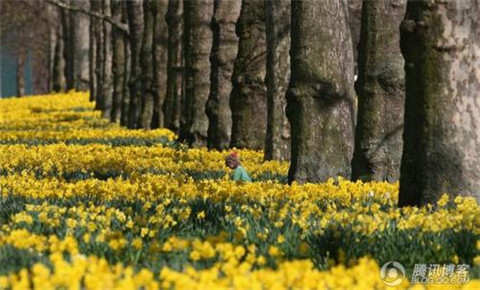
2. The Daffodils I wandered lonely as a cloud That floats on high o’er vales and hills, When all at once I saw a crowd, A host of golden daffodils; Beside the lake, beneath the trees, Fluttering and dancing in the breeze. Continuous as the stars that shine And twinkle on the Milky Way, They stretched in never-ending line Along the margin of a bay: Ten thousand saw I at a glance, Tossing their heads in sprightly dance. The waves beside them danced; but they Outdid the sparkling waves in glee: A poet could not but be gay, In such a jocund company: I gazed --- and gazed --- but little thought What wealth the show to me had brought: For oft, when on my couch I lie In vacant or in pensive mood, They flash upon that inward eye Which is the bliss of solitude; Ans then my heart with pleasure fills, And dances with the daffodils. Notes: a crowd, a host of: many sprightly:happy glee:joy jocund:happy bliss:complete happiness pensive:sadly thoughtful (William Wordsworth,1770-1850),十九世纪初英格兰北部湖区三大“”(浪漫主义)之一。
此诗向我们描绘了一幅美好的自然景象,同时抒发作者对自然美景的喜欢。
黄水仙据说是威尔士国花(1282年,威尔士归顺英格兰,被封公国),在英国广泛栽种,春季开花,花期不长。
有许多关于黄水仙的诗歌,这首诗无疑是脱颖而出的。
全诗语言精炼,通俗易懂,四音步抑扬格,分四节(stanza),每节6行,每节押韵均为ababcc。
第一节写诗人孤寂时外出散步,偶遇水仙;第二节写水仙争相开放,千姿百态;第三节,诗人看到这景象感到欣喜异常;第四节写诗人在日后忧郁时,回想当时情景,又让他心中充满了欢乐,随着水仙跳起舞来。
3. Song of Myself I celebrate myself, and sing myself, And what I assume you shall assume, For every atom belonging to me as good belongs to you. I loafe and invite my soul, I learn and loafe at my ease observing a spear of summer grass. My tongue, every atom of my blood, form’d from this soil, this air, Born here of parents born here from parents the same, and their parents the same, I, now thirty seven years old in perfect health begin, Hoping to cease not till death. Creeds and schools in abeyance, Retiring back a while sufficed at what they are, but never forgotten. I harbor for good or bad, I permit to speak at every hazard. Nature without check with original energy. Notes: a spear of: a piece of school:学说,流派 hazard:chance abeyance: the condition of not being in use for a certain time (Walt Whitman,1819-1892),美国诗人。
此诗选自其巨著<<草叶集>>。
本文是Song of Myself 一诗的第一部分,采用自由诗体,语言接近当时的美国口语。
文中I指作者,you指读者,这种写法使读者身临其境,进入作者描写的世界。
作者在文中表明人的价值是平等的,同时他把自己融入到自然带给他的启发思考中。
从上看出,诗歌的欣赏评判并非可望而不可及,关键要抓住诗中的意象,了解其语义,以便把握诗的大意。
纵然每个人的读后感会有不同,但每个人都会在阅读过程中感受到诗歌带来的美和精神上的共鸣。
莎士比亚十四行诗第十八首的英文评论和赏析
◎ 莎士比亚十四行诗第18首 ◇ 曹明伦 译 18 18 我是否可以把你比喻成夏天
Shall I compare thee to a summer's day? 虽然你比夏天更可爱更温和: Thou art more lovely and more temperate: 狂风会使五月娇蕾红消香断, Rough winds do shake the darling buds of May, 夏天拥有的时日也转瞬即过; And summer's lease hath all too short a date: 有时天空之巨眼目光太炽热, Sometime too hot the eye of heaven shines, 它金灿灿的面色也常被遮暗; And often is his gold complexion dimmed, 而千芳万艳都终将凋零飘落, And every fair from fair sometime declines, 被时运天道之更替剥尽红颜; By chance, or nature's changing course untrimmed: 但你永恒的夏天将没有止尽, But thy eternal summer shall not fade, 你所拥有的美貌也不会消失, Nor lose possession of that fair thou ow'st, 死神终难夸口你游荡于死荫, Nor shall death brag thou wander'st in his shade, 当你在不朽的诗中永葆盛时; When in eternal lines to time thou grow'st, 只要有人类生存,或人有眼睛, So long as men can breathe, or eyes can see, 我的诗就会流传并赋予你生命。
So long lives this, and this gives life to thee. 注:第11行语出《旧约•诗篇》第23篇第4节:“虽然我穿行于死荫之幽谷,但我不怕罹祸,因为你与我同在……” 英文赏析: This is one of the most famous of all the sonnets, justifiably so. But it would be a mistake to take it entirely in isolation, for it links in with so many of the other sonnets through the themes of the descriptive power of verse; the ability of the poet to depict the fair youth adequately, or not; and the immortality conveyed through being hymned in these 'eternal lines'. It is noticeable that here the poet is full of confidence that his verse will live as long as there are people drawing breath upon the earth, whereas later he apologises for his poor wit and his humble lines which are inadequate to encompass all the youth's excellence. Now, perhaps in the early days of his love, there is no such self-doubt and the eternal summer of the youth is preserved forever in the poet's lines. The poem also works at a rather curious level of achieving its objective through dispraise. The summer's day is found to be lacking in so many respects (too short, too hot, too rough, sometimes too dingy), but curiously enough one is left with the abiding impression that 'the lovely boy' is in fact like a summer's day at its best, fair, warm, sunny, temperate, one of the darling buds of May, and that all his beauty has been wonderfully highlighted by the comparison。
这是整体赏析 1. Shall I compare thee to a summer's day? This is taken usually to mean 'What if I were to compare thee etc?' The stock comparisons of the loved one to all the beauteous things in nature hover in the background throughout. One also remembers Wordsworth's lines: We'll talk of sunshine and of song, And summer days when we were young, Sweet childish days which were as long As twenty days are now. Such reminiscences are indeed anachronistic, but with the recurrence of words such as 'summer', 'days', 'song', 'sweet', it is not difficult to see the permeating influence of the Sonnets on Wordsworth's verse. 2. Thou art more lovely and more temperate: The youth's beauty is more perfect than the beauty of a summer day. more temperate - more gentle, more restrained, whereas the summer's day might have violent excesses in store, such as are about to be described. 3. Rough winds do shake the darling buds of May, May was a summer month in Shakespeare's time, because the calendar in use lagged behind the true sidereal calendar by at least a fortnight. darling buds of May - the beautiful, much loved buds of the early summer; favourite flowers. 4. And summer's lease hath all too short a date: Legal terminology. The summer holds a lease on part of the year, but the lease is too short, and has an early termination (date). 5. Sometime too hot the eye of heaven shines, Sometime = on occasion, sometimes; the eye of heaven = the sun. 6. And often is his gold complexion dimmed, his gold complexion = his (the sun's) golden face. It would be dimmed by clouds and on overcast days generally. 7. And every fair from fair sometime declines, All beautiful things (every fair) occasionally become inferior in comparison with their essential previous state of beauty (from fair). They all decline from perfection. 8. By chance, or nature's changing course untrimmed: By chance accidents, or by the fluctuating tides of nature, which are not subject to control, nature's changing course untrimmed. untrimmed - this can refer to the ballast (trimming) on a ship which keeps it stable; or to a lack of ornament and decoration. The greater difficulty however is to decide which noun this adjectival participle should modify. Does it refer to nature, or chance, or every fair in the line above, or to the effect of nature's changing course? KDJ adds a comma after course, which probably has the effect of directing the word towards all possible antecedents. She points out that nature's changing course could refer to women's monthly courses, or menstruation, in which case every fair in the previous line would refer to every fair woman, with the implication that the youth is free of this cyclical curse, and is therefore more perfect. 9. But thy eternal summer shall not fade, Referring forwards to the eternity promised by the ever living poet in the next few lines, through his verse. 10. Nor lose possession of that fair thou ow'st, Nor shall it (your eternal summer) lose its hold on that beauty which you so richly possess. ow'st = ownest, possess. By metonymy we understand 'nor shall you lose any of your beauty'. 11. Nor shall death brag thou wander'st in his shade, Several half echoes here. The biblical ones are probably 'Oh death where is thy sting? Or grave thy victory?' implying that death normally boasts of his conquests over life. And Psalms 23.3.: 'Yea though I walk through the valley of the shadow of death I will fear no evil ' In classical literature the shades flitted helplessly in the underworld like gibbering ghosts. Shakespeare would have been familiar with this through Virgil's account of Aeneas' descent into the underworld in Aeneid Bk. VI. 12. When in eternal lines to time thou grow'st, in eternal lines = in the undying lines of my verse. Perhaps with a reference to progeny, and lines of descent, but it seems that the procreation theme has already been abandoned. to time thou grow'st - you keep pace with time, you grow as time grows. 13. So long as men can breathe, or eyes can see, For as long as humans live and breathe upon the earth, for as long as there are seeing eyes on the eart. 14. So long lives this, and this gives life to thee. That is how long these verses will live, celebrating you, and continually renewing your life. But one is left with a slight residual feeling that perhaps the youth's beauty will last no longer than a summer's day, despite the poet's proud boast. 这是逐句赏析 中文版:以莎氏十四行诗第18首为例,以往从未有人指出过它的缺点,但笔者根据教学实践得来的体会,认为它至少有两大缺点,一是在音韵方面,其韵脚、头韵和韵格均不同程度的破坏了诗歌的音美和形美;二是某些比喻和描述的平淡或离奇破坏了诗歌的意美。
一、音韵参差,破坏了音美和形美 全诗的基本格律是五音步抑扬格(iambic pentameter),包括三个四行组(quatrain)和一个对偶句(couplet),采用典型的莎氏十四行的韵式,即abab cdcd efef gg。
但本诗音韵并不十分齐整。
在韵脚(end rhyme)方面,第二行的temperate与第四行的date押韵,但两个词的重音位置却不同,这一韵就既非阳韵(masculine rhyme)也非阴韵(feminine rhyme),显得不伦不类,与其它严整的韵对比,这一韵念起来令人颇感突兀,破坏了诗歌的音韵美。
头韵(alliteration)方面,第六和第七行都以And 起头,形成头韵,但这两个并列的简单陈述句从意义上看,造成了语意在同一水平上徘徊而不是递进,而且用相同的And起头使两句不仅在语意也在形式上显得拖沓而无变化,破坏了诗歌的音韵美和形式美。
韵格(meter)方面,五音步抑扬格的诗歌是常有破格的,特别是在诗歌首行的第一个音步,经常是前重音后轻音。
适当的破格可使诗歌免于呆板,增加变化,使音韵更显其美。
但过多的破格就会打乱诗歌的格式,使其音律显得零碎,给诗歌带来负面影响,本诗即是如此。
第一行“Shall I compare thee to a summer’s day?”中的“thee to”是无法按轻重音的顺序来念的,第二行“Thou art more lovely and more temperate”中的两个more是强调,要念重音,因此这一行的韵格就不是抑扬格了。
第六行“And often is his gold complexion dimm’d”中前两个音步的轻重音位置是模糊的。
第十行“Nor lose possession of that fair thou owest”中的第一个音步可以看作是破格,第十一行“Nor shall Death brag thou wander’st in his shade”中的“Nor shall Death brag”重音和轻音顺序应是“重轻重重”,也不是抑扬格。
可见,本诗因为破格过多,格律形式有点混乱,诗歌齐整的音韵美受到了损害。
实际上,学生也经常反映这首诗歌读起来有些地方很拗口,主要就是因为韵律破格太多所致。
二、比喻和描述有时平淡或离奇,破坏意美 诗歌之美,不仅体现在音美和形美上,而且还有语意层面的美。
通过语法、词汇或使用比喻等,可以建构诗歌的意美。
本诗中有美丽的语言,如“darling buds of May”(五月的嫩蕊)、“eternal summer”(长夏)、“thou wander’st in his shade”(在他的暗影里蹉跎),但也有平常的比喻和描述,如诗中将“你”比喻为“夏季”,把太阳比成“天上的眼睛”,有“金色的面容”,这当然不是平淡的描述,但至少也不是新鲜的。
而说死神能“夸口”,这种拟人的手法多少有些平淡了。
诗中又说夏天有“租期”,租期又“太短”,则令人感到有些陌生,难有美感了。
时光匆匆是人人皆知的常识,诗中用复杂的表述来说明浅显的道理,很难令人感到亲切,这样的比喻并未达到增强表现力的效果。
这种将简单复杂化从而使人产生隔膜的例子还有“nature’s changing course untrimm’d ”以及“that fair thou owest”。
而“And every fair from fair”则让一般读者感到很抽象,难以理解。
“So long as men can breathe or eyes can see”也是一句很平常的散文句。
以上所述,是莎氏十四行诗第18首在诗艺上的缺陷。
当然诗中古雅的用词和句法也会给普通读者带来阅读上的不适,但这是古今语言演变造成的隔膜,并非诗歌本身的原因,正如其多个汉译文,现在看起来也有时代距离感一样。
莎士比亚十四行诗第18首是一首经典诗歌,其美妙自不待言,但是从另一个角度检视和观察,认识其缺点和不足,以避免盲目吹捧和过度美化,应该是对待文学经典的更全面因而是更可取的方法。
PS:都是非原创,是我在各个论坛,空间里找的。
但是希望可以啊帮到你~~~~~~~·
莎士比亚最浪漫的爱情诗
不爱自己,怎么能爱别人
婚姻是青春的结束, 人生的开始。
爱是温柔的吗
它太粗暴、太专横、太野蛮了; 它像荆棘一样刺人。
真诚的爱情永远不是一条平坦的大道。
吻是恋爱生活上的一首诗。
爱的黑夜有中午的阳光。
如果说「喜欢」不需要理由的话, 那么「憎恨」也就不需要什么依据。
最甜的蜜糖可以使味觉麻木; 不太热烈的爱情才会维持久远; 太快和太慢,结果都不会圆满。
悲哀是爱情的证据。
但是, 深深的悲哀是判断力不足的证据。
经典爱情诗——海 涅 什么是爱
」 「爱就是笼罩在晨雾中一颗星。
」 没有你, 天堂也变成地狱。
可爱的战溧,微妙的颤抖, 这...羞怯温柔的拥抱-- 在你美丽的樱唇上, 我惯用接吻来代替语言, 我的吻就像是从我的心底冒出的一个火焰
昨天吻过我的幸福, 今天已经化为乌有, 我获得真诚的爱情, 向来总不能持久。
女人使男人得到幸福的方法有一种; 但使男人陷于不幸的方法却有三千多种
只有在爱情之中才有真实。
「爱情究竟是什么
」
适合大学生的英文诗歌朗诵,3分钟左右的。
YouthSamuel Ullman Youth is not a time of life; it is a state of mind; it is not a matter of rosy cheeks, red lips and supple knees; it is a matter of the will, a quality of the imagination, vigor of the emotions; it is the freshness of the deep spring of life. Youth means a temperamental predominance of courage over timidity, of the appetite for adventure over the love of ease. This often exists in a man of 60 more than a boy of 20. Nobody grows old merely by a number of years. We grow old by deserting our ideas. Years may wrinkle the skin, but to give up enthusiasm wrinkles the soul. Worry, fear, self-distrust bows the heart and turns the spirit back to dust. Whether 60 or 16, there is in every human being’s heart the lure of wonder, the unfailing childlike appetite for what’s next and the joy of the game of living. In the center of your heart and my heart there is a wireless station: so long as it receives messages of beauty, hope, cheer, courage and power from men and from the Infinite, so long are you young. When the aerials are down, and your spirit is covered with snows of cynicism and the ice of pessimism, then you‘ve grown old, even at 20. But as long as your aerials are up, to catch waves of optimism, there is hope you may die young at 80. 很经典的一篇英语诗歌,朗诵时要注意语调,语速。
祝你好运
如何赏析一首英文诗歌
英诗的欣赏:诗的格律、诗的押韵、诗的体式、诗的评判。
诗以高度凝结的语言表达着人们的喜怒哀乐,用其特有的节奏与方式影响着人们的精神世界。
诗讲究联想,运用象征、比喻、拟人等各种修辞手法,形成了独特的语言艺术。
一、 诗的格律 “格律是指可以用脚打拍子的节奏”,是每个音步轻重音节排列的格式,也是朗读时轻重音的依据。
而音步是由重读音节和非重读音节构成的诗的分析单位。
重读音节为扬(重),在音节上用“-”或“?”标示,非重读音节为抑(轻),在音节上用“?”标示,音步之间可用“/”隔开。
以下是五种常见格式:1. 抑扬格(轻重格)Iambus:是最常见的一种格式,每个音步由一个非重读音节加一个重读音节构成。
As fair \\\/ art thou \\\/ my bon\\\/nie lass,So deep \\\/ in luve \\\/ am I :And I \\\/ will luve \\\/ thee still,\\\/ my dear, Till a` \\\/ the seas \\\/ gang dry:Robert Burns(1759-1796): My Luve Is like a Red, Red Rose注;art=are luve=love bonnie=beautiful a`=all gang=go上例中为四音步与三音步交叉,可标示为:?-/?-/?-/(?-)2.扬抑格(重轻格)Trochee:每个音步由一个重读音节加一个非重读音节构成。
下例中为四音步扬抑格(少一个轻音节),可标示为:-?/-?/-?/-Tyger
\\\/ Tyger
\\\/ burning \\\/ brightIn the \\\/ forests \\\/ of the \\\/ nightWilliam Blake: The Tyger3. 抑抑扬格(轻轻重格)Anapaestic foot: 每个音步由两个非重读音节加一个重读音节构成。
如:三音步抑抑扬格??-/??-/??-Like a child \\\/ from the womb,Like a ghost \\\/ from the tomb,I arise \\\/ and unbuild \\\/ it again.4. 扬抑抑格(重轻轻格)Dactylic foot: 每个音步由一个重读音节加两个非重读音节构成。
如:两音步扬抑抑格-??/-???Touch her not \\\/ ?scornfully,?Think of her \\\/ ?mournfully.- Thomas Hood5. 抑扬抑格(轻重轻格)Amphibrach:每个音步由一个非重读音节加一个重读音节再加一个非重读音节构成。
如:三音步抑扬抑格?-?/?-?/?-?下例中最后一个音步为抑扬格。
O ?hush thee \\\/ my ?babie \\\/ thy ?sire was \\\/ a knight.在同一首诗中常会出现不同的格律,格律解析对朗读诗歌有一定参考价值。
现代诗中常不遵守规范的格律。
二、 诗的押韵押韵是指通过重复元音或辅音以达到一定音韵效果的诗歌写作手法。
1. 尾韵:最常见,最重要的押韵方式。
1) 联韵:aabb型。
I shot an arrow into the air,It fell to earth, I knew not where;For, so swiftly it flew, the sightCould not follow it in its flight.Henry Wadsworth Longfellow: The Arrow and the Song2) 交叉韵:abab型。
Sunset and evening star,And one clear call for me
And may there be no moaning of the bar,When I put out to sea,Alfred Tennyson(1809-1892): Crossing the Bar3) 同韵:有的诗押韵,一韵到底,大多是在同一节诗中共用一个韵脚。
如下例就共用/i:p/为韵脚。
The woods are lovely, dark and deep,But I have promises to keep,And miles to go before I sleep,And miles to go before I sleep.Robert Frost (1874-1963): Stopping by Woods on a Snowy Evening2. 头韵:是指一行(节)诗中几个词开头的辅音相同,形成押韵。
下例中运用/f/、/b/与/s/头韵生动写出了船在海上轻快航行的景象。
The fair breeze blew, the white foam flew,The furrow followed free,We were the first that ever burstInto that silent sea.T.S. Coleridge: Rime of the Acient Mariner3.内韵(同元音):指词与词之间原因的重复形成的内部押韵。
下面一节诗中/i/及/iη/重复照应,呈现出一派欢乐祥和的气氛。
Spring, the sweet spring, is the year‘s pleasant king;Then blooms each thing, then maids dance in a ring,Cold dath not sting, the pretty birds do sing:Cuckoo,jug-jug,pu-we,to-witta-woo
Thomas Nashe(1567-1601): Spring, the Sweet Spring三、 诗的体式有的诗分成几节(stanza),每节由若干诗行组成(每行诗均以大写字母开头);有的诗则不分节。
目前我们常见的诗体有:1. 十四行诗(Sonnet),源于中世纪民间抒情短诗,十三、十四世纪流行于意大利,意大利彼特拉克(Petrarch)为代表人物,每行十一个音节,全诗一节八行,加一节六行,韵脚用abba, abba, cdcdcd (cdecde)。
前八行提问,后六行回答。
后来,怀亚特(ThomasWyatt,1503-1542)将十四行诗引人英国,五音步抑扬格,全诗三个四行一个二行,前三节提问,后二句结论。
斯宾塞(EdmundSpenser,1552-1599)用韵脚 abab, bcbc,cdcd,ee.莎士比亚(WilliamShakespeare,1564-1616)用韵脚abab,cdcd,dfdf,gg,称英国式或莎士比亚式。
举例见本文第四部分。
2. 打油诗(Limericks):通常是小笑话甚至是胡诌,一般没有标题也无作者姓名,含有幽默讽刺性,常运用双关,内韵等手法。
每首诗五个诗行,押韵为aabba,格律以抑扬格和抑抑扬格为主。
1) There was a young lady of NiggerWho smiled as she rode on a tiger;They returned from the rideWith the lady inside,And the smile on the face of the tiger.2) A tutor who taught on the fluteTried to teach two tooters to toot,“Is it harder to toot, orSaid the two to the tutor,To tutor two tooters to toot
“3. 无韵体(Blank Verse):五音步抑扬格,不押韵诗体。
Across the watery bale , and shout again,Responsive to his call, - with quivering peals,And long halloos, and screams, and echoes loud.Redoubled and redoubled:concourse wildOf jocund din
…William Wordsworth: There Was a Boy4. 自由诗(FreeVerse):现代诗中常见的体式,长短不同的诗行存在于同一首诗中,不讲究押韵与格律,只注重诗歌所表达的意象和传递的情感。
美国诗人WaltWhitman的>(Leaves of Grass)中,就采用此格式。
例子见第四部分。
四、 诗的评判对一首诗,个人的感受会有不同。
节奏流畅,语言精炼,联想新颖的诗可算是好诗。
堆砌词藻,一味抒发感情而无实际内容的诗,只能是下乘的诗。
二十世纪英美诗歌大量采用自由诗体,接近口语,可谓大胆创新,大概也是诗歌发展的大势所趋吧。
以下通过三首诗的分析看诗的评判。
1. That Time of YearThat time of year thou may‘st in me beholdWhen yellow leaves,or none,or few, do hangUpon those boughs which shake against the cold,Bare ruined choirs where late the sweet birds sang,In me thou see‘st the twilight of such dayAs after sunset fadeth in the west,When by and by black night doth take away,Death‘s second self, that seals up all in rest.In me thou see‘st the glowing of such fire,That on the ashes of his youth doth lie.As the deathbed whereon it must expire,Consumed with that which it was nourished by.This you perceivest, which makes thy love more strong,To love that well which thou must leave ere long.Notes:may‘st:may behold:see late:no long ago thou:you see’st:seefadeth:fades doth:does seals up all at rest:彻底埋葬thy:your perceivest: perceive ere long: before long此诗是莎士比亚(William Shakespeare, 1564-1616)的一首十四行诗。
作为英国文学巨匠,他以37部剧作和154首十四行诗屹立于世界文坛。
此诗为五音步抑扬格,每个诗行格律为:?-/?-/?-/?-/?-/。
全诗涉及衰老、死亡及爱情问题。
前十二行:通过描写深秋的树枝黄叶凋零,曾是百鸟争鸣的歌坛,联想到自身青春会如夕阳消逝在远方,被黑夜吞没;自身的青春会如将尽的柴火奄奄一息,被曾滋养过它的火焰焚化。
其中choirs(歌坛),deathbed(灵床)使用暗喻手法,同时又用夕阳和柴火象征人的衰老死亡。
最后两行:点题,人们对即将永别的东西会更珍惜。
本文动词变化具有明显的伊利沙白时代的特点。
2. The DaffodilsI wandered lonely as a cloudThat floats on high o‘er vales and hills,When all at once I saw a crowd,A host of golden daffodils;Beside the lake, beneath the trees,Fluttering and dancing in the breeze.Continuous as the stars that shineAnd twinkle on the Milky Way,They stretched in never-ending lineAlong the margin of a bay:Ten thousand saw I at a glance,Tossing their heads in sprightly dance.The waves beside them danced; but theyOutdid the sparkling waves in glee:A poet could not but be gay,In such a jocund company:I gazed - and gazed - but little thoughtWhat wealth the show to me had brought:For oft, when on my couch I lieIn vacant or in pensive mood,They flash upon that inward eyeWhich is the bliss of solitude;Ans then my heart with pleasure fills,And dances with the daffodils.Notes: a crowd, a host of: many sprightly:happy glee:joyjocund:happy bliss:complete happiness pensive:sadly thoughtful华兹华斯(WilliamWordsworth,1770-1850),十九世纪初英格兰北部湖区三大“湖畔派诗人”(浪漫主义)之一。
此诗向我们描绘了一幅美好的自然景象,同时抒发作者对自然美景的喜欢。
黄水仙据说是威尔士国花(1282年,威尔士归顺英格兰,被封公国),在英国广泛栽种,春季开花,花期不长。
有许多关于黄水仙的诗歌,这首诗无疑是脱颖而出的。
全诗语言精炼,通俗易懂,四音步抑扬格,分四节(stanza),每节6行,每节押韵均为ababcc.第一节写诗人孤寂时外出散步,偶遇水仙;第二节写水仙争相开放,千姿百态;第三节,诗人看到这景象感到欣喜异常;第四节写诗人在日后忧郁时,回想当时情景,又让他心中充满了欢乐,随着水仙跳起舞来。
3. Song of MyselfI celebrate myself, and sing myself,And what I assume you shall assume,For every atom belonging to me as good belongs to you.I loafe and invite my soul,I learn and loafe at my ease observing a spear of summer grass.My tongue, every atom of my blood, form‘d from this soil, this air,Born ere of parents born here from parents the same, and their parents the same,I, now thirty seven years old in perfect health begin,Hoping to cease not till death.Creeds and schools in abeyance,Retiring back a while sufficed at what they are, but never forgotten.I harbor for good or bad, I permit to speak at every hazard.Nature without check with original energy.Notes: a spear of: a piece of school:学说,流派 hazard:chanceabeyance: the condition of not being in use for a certain time惠特曼(Walt Whitman,1819-1892),美国诗人。
此诗选自其巨著。
本文是Song of Myself 一诗的第一部分,采用自由诗体,语言接近当时的美国口语。
文中I指作者,you指读者,这种写法使读者身临其境,进入作者描写的世界。
作者在文中表明人的价值是平等的,同时他把自己融入到自然带给他的启发思考中。
从上看出,诗歌的欣赏评判并非可望而不可及,关键要抓住诗中的意象,了解其语义,以便把握诗的大意。
纵然每个人的读后感会有不同,但每个人都会在阅读过程中感受到诗歌带来的美和精神上的共鸣。